FIL ROUGE

Francesca Rubei


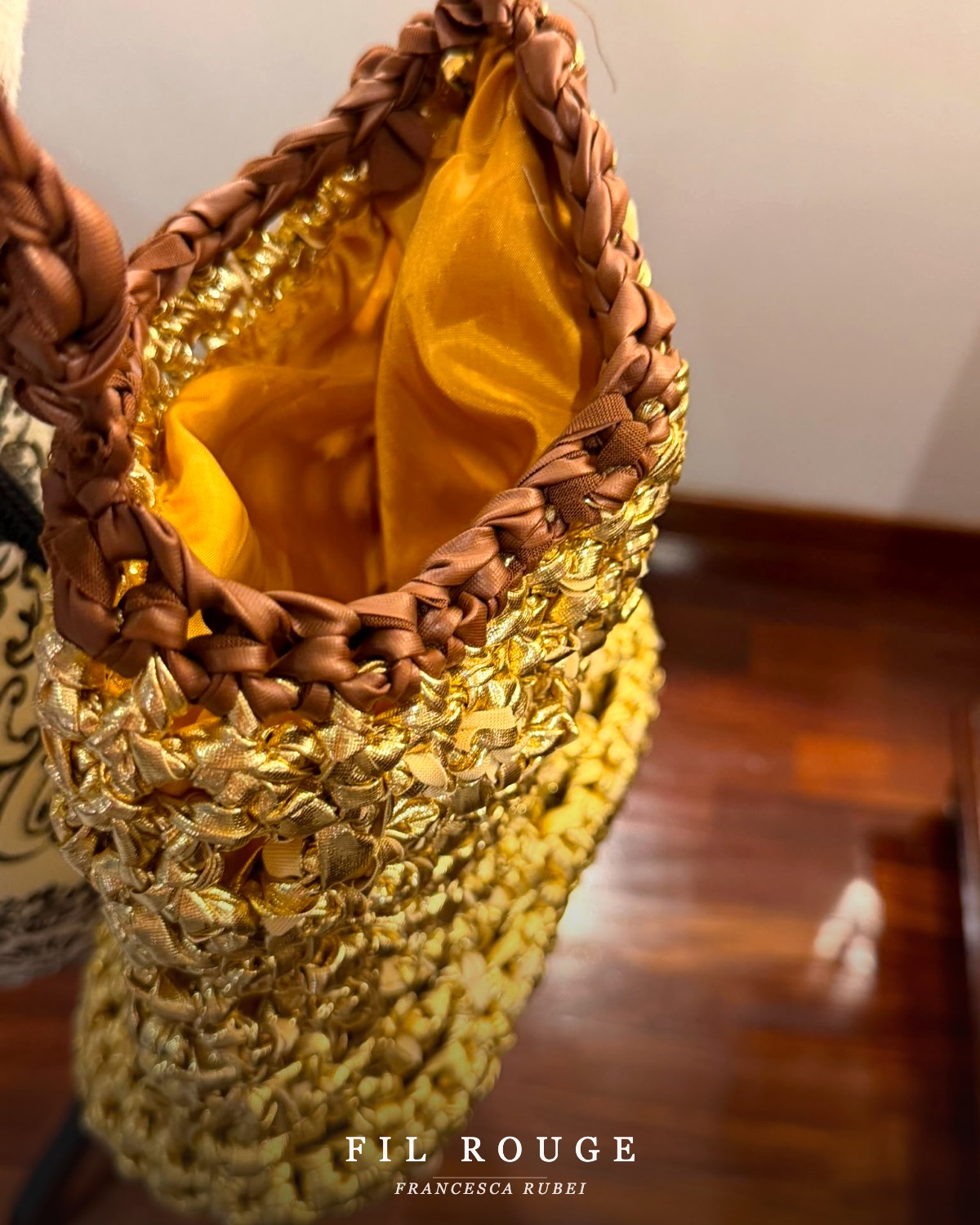
Close-up of hand-knotted gold ribbon crochet work on a Fil Rouge bag

The Atelier

How a piece of thread becomes a piece of you.

There is no factory behind Fil Rouge. There is a chair, good light, a crochet hook, and time.

Every piece in the collection — from the lightest bikini top to the densest woven bag — is built the same way: by hand, stitch after stitch, with nothing pre-cut and nothing pre-made. Look closely at any Fil Rouge piece and you can read its making in the surface, like rings in a tree.

Step by Step

From thread to finished piece

I.

The thread

Everything starts with the material. Cottons for structure, softer yarns for drape, satin ribbon for the bags that need to catch the light. Colour comes first — the reds, caramels, blush pinks and golds that define the collection — and the fibre is chosen to match how the piece will live: swimwear that survives salt and sun, tops that breathe, bags that hold their shape.

II.

The pattern

Each design begins as a sketch and a swatch. Francesca crochets a test panel to set the tension and the stitch — tighter for structure, more open for lace-like transparency — and adjusts until the fabric behaves exactly as the design demands. Only then does the real piece begin.

III.

The making

This is the slow part, and the heart of it. A top grows row by row over many hours; a woven bag, knot by knot. Shaping happens in the stitches themselves — increases and decreases placed exactly where the body curves — so the piece fits the way cut-and-sewn fabric never quite can.

IV.

The finishing

Edges are worked with scalloped or picot borders, straps are braided or reinforced, bags are lined so they carry real life, not just photographs. Every seam and closure is checked by hand — twice.

V.

The signature

Last of all, the small woven F.R. tag with its red heart is stitched into place. It is the maker's mark: proof that the piece passed through one pair of hands, from the first loop of thread to this final stitch.

“A machine would finish in minutes.
That is precisely why I don't use one.” Francesca Rubei

Caring for your piece

Handmade wants gentle hands.

Hand-crocheted pieces last for years when treated kindly. Wash by hand in cool water with a mild soap, press the water out gently — never wring — and dry flat, away from direct sun. Store folded rather than hung, so the stitches keep their shape.

If a piece ever needs repair, write to Francesca. What is made by hand can almost always be mended by hand.

Ask a Question
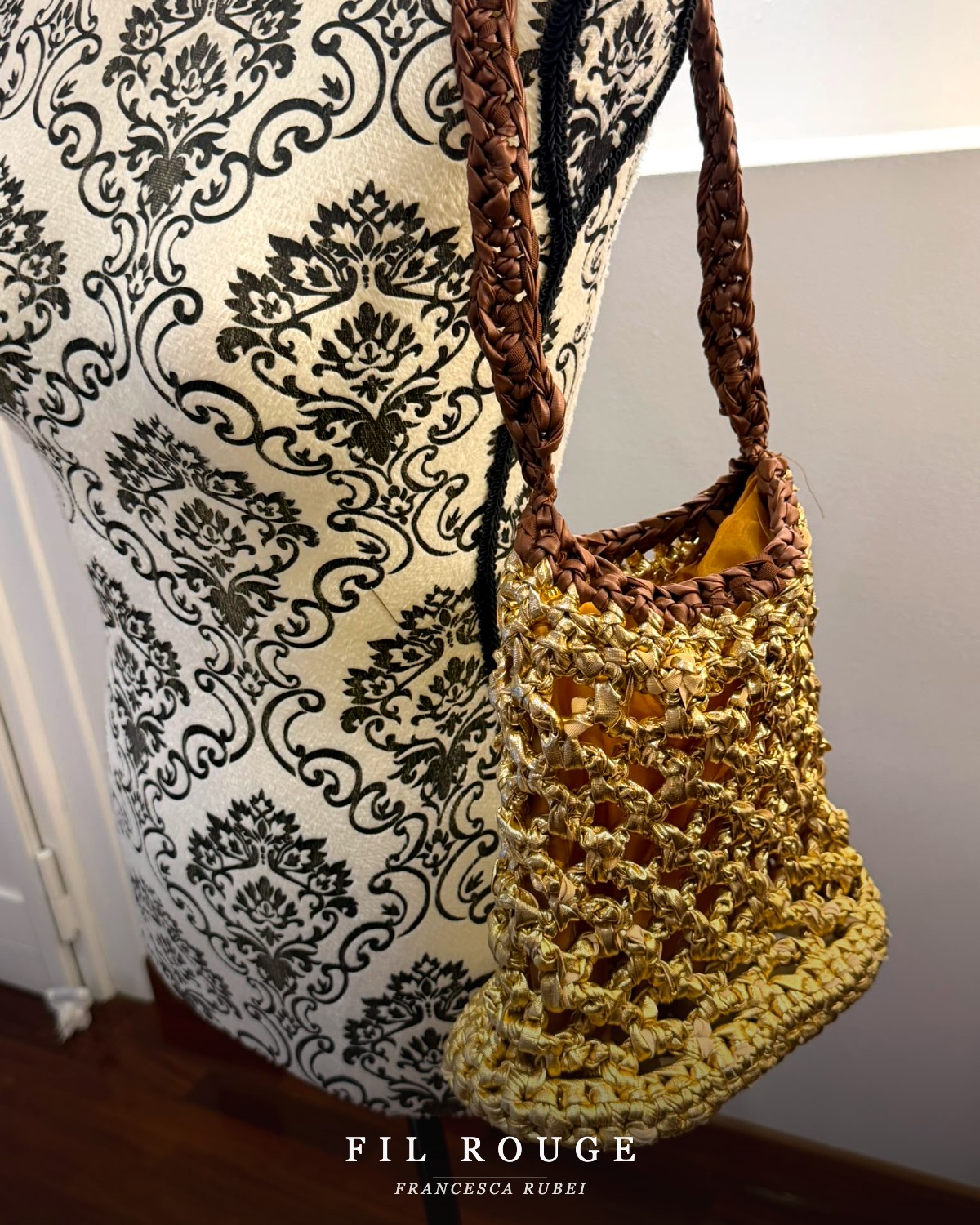
Finished gold woven bucket bag with braided strap, hanging on the atelier mannequin